Interior Design Choices That Make a Home Feel Expensive
There is a quality that certain homes have that is difficult to name precisely but immediately recognisable when you walk in. The space feels considered. It feels calm. It feels like money was spent thoughtfully rather than lavishly. And interestingly, that feeling is not always the result of a large budget. It is almost always the result of specific design decisions made consistently throughout the space.
Understanding what those decisions are, and why they work, makes them accessible to anyone regardless of how much they are working with.
Proportion and Scale Above Everything
The single most common mistake in interior design at any budget level is choosing furniture or fixtures that are the wrong size for the space. An oversized sofa that crowds a small living room. A dining table that seats eight in a room that comfortably fits four. A tiny artwork hung on an expansive wall where it looks lost and accidental.
Proportion is the foundation of a space that feels right. It is not about filling every corner or maximising capacity. It is about ensuring that each element relates correctly to the room it sits in and to the elements around it. A room where the scale is well considered looks composed even when the individual pieces are modest.
Before purchasing any significant piece, measure. Not just the floor space but the ceiling height, the wall widths, the sight lines from entry points. The effort takes minutes and prevents the kind of expensive mistakes that cannot be undone without starting again.
Vertical Space Is Consistently Underused
Most people design for the horizontal plane. Furniture sits on the floor, artwork hangs at eye level, storage occupies a predictable zone between knee and shoulder height. The vertical dimension of a room, from floor to ceiling, is frequently ignored.
Using vertical space changes how a room feels entirely. Floor-to-ceiling shelving makes a room feel taller and more purposeful. Curtains hung close to the ceiling and falling to the floor elongate a wall even when the window itself is modest. Tall, slim furniture draws the eye upward and creates a sense of height that wider, lower pieces cannot.
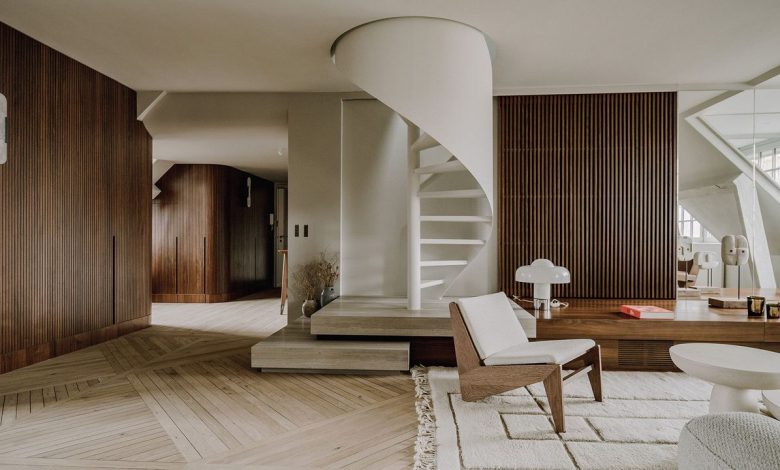
Staircases are one of the most powerful vertical design opportunities in any multi-level home, and one of the most neglected. A staircase that treats structure as decoration, with carefully chosen materials, clean lines, and considered balustrade design, changes the entire character of a home’s interior. It is often the first thing seen upon entering and sets the tone for everything that follows. Several designers we have spoken to over the years have mentioned Aussie Stairs as a name that comes up regularly in projects where the staircase is being treated as a genuine design feature rather than a functional afterthought.
Restraint in Colour Creates Sophistication
Homes that feel expensive tend to use colour deliberately and sparingly. This does not mean everything must be white or neutral. It means that the palette is controlled. Colours relate to each other. There is a logic to what appears where, and it is consistent throughout the space.
A useful starting approach is to choose three colours for any given room: a dominant tone that covers the majority of the surface area, a secondary tone that appears in furnishings and textiles, and an accent used in small doses. This structure prevents the visual noise that comes from too many competing colours and creates a sense of coherence that reads as intentional and refined.
Texture does the work that colour is often asked to do in lesser-considered spaces. A room in quiet, related tones with varied textures, linen, timber, stone, matte plaster, has far more depth and interest than a colourful room where everything sits at the same visual weight.
Quality in the Details That Get Touched
People assess quality through touch as much as through sight. Door handles, tapware, light switches, drawer pulls. These are the elements of a home that are physically interacted with dozens of times a day. When they feel solid and considered, they communicate quality throughout the entire space. When they feel cheap or flimsy, they undermine everything around them.
This is one of the most effective places to allocate budget in any interior project. Upgrading hardware throughout a home costs a fraction of what major renovations cost, but the felt quality of the space changes meaningfully. Matte black or brushed metal finishes in a consistent language across rooms create cohesion. Mixed, inconsistent hardware tells the story of decisions made at different times without a guiding vision.
Lighting Is the Most Underrated Design Tool
Most homes are dramatically underlighted, and in the wrong places. A single ceiling fixture in the centre of a room creates flat, unflattering light that makes even well-designed spaces look ordinary. Layered lighting, ambient, task, and accent, transforms how a room looks and feels at every hour of the day.
Ambient lighting sets the base level and comes from ceiling fixtures, recessed lighting, or indirect sources. Task lighting is focused and purposeful, over a desk, above a kitchen bench, beside a reading chair. Accent lighting draws attention to specific elements, a piece of art, a textured wall, an architectural detail.
The combination of all three, controlled where possible by dimmers, creates a space that feels alive and adaptable. A room that looks the same at noon and at 9pm is a room that has not been fully designed.
Edit Relentlessly
The final quality of spaces that feel genuinely expensive is that they contain the right amount of things and no more. Every object earns its place or it is removed. There is breathing room between pieces. Surfaces are clear enough that the objects that remain on them are noticed and appreciated.
Editing is harder than adding, but it is where most of the work of good design actually happens. Walk through your home with fresh eyes and ask of every object whether it is earning its presence. The ones that cannot answer that question clearly are the ones to reconsider.