10 Creative Uses for Pioneer Cabins: From Guest House to Home Office
If you have extra space on your property and you are trying to figure out what to do with it, pioneer cabins are one of the most versatile small structures you can put up. They are compact, they are built with solid wood, and they have enough headroom and floor space to serve a long list of purposes beyond the obvious storage shed role most people picture. The beauty of a structure like this is that it gives you a separate, finished room without the cost and permitting headache of a full addition onto your house.
The trick is matching the use to the way you actually live. A cabin that sits empty most of the year is a missed opportunity. A cabin that is set up for a specific purpose, with the right insulation, lighting, and layout, becomes the most used square footage on your property. Here are ten creative ways people are putting these small cabins to work, with notes on what each one needs to actually function well.
1. A Guest House That Feels Like a Real Retreat
This is the most popular use for a reason. A standalone cabin gives overnight guests privacy that a spare bedroom inside the house simply cannot match, and it gives you your own space back when the visit stretches past a few days. The key to making it work as a guest house is a small but functional bathroom, a sleeping area that fits a real mattress, and a small kitchenette so guests can make coffee and a snack without coming through your kitchen at 6 a.m.
Insulate the walls and floor if you want guests to be comfortable in any season, and add a small wall heater or a mini-split so the space has its own climate control. A curtain across the sleeping area gives the space a softer, more finished feel than an open room, and a small rug makes a wood floor feel warm under bare feet.
2. A Home Office That Actually Lets You Focus
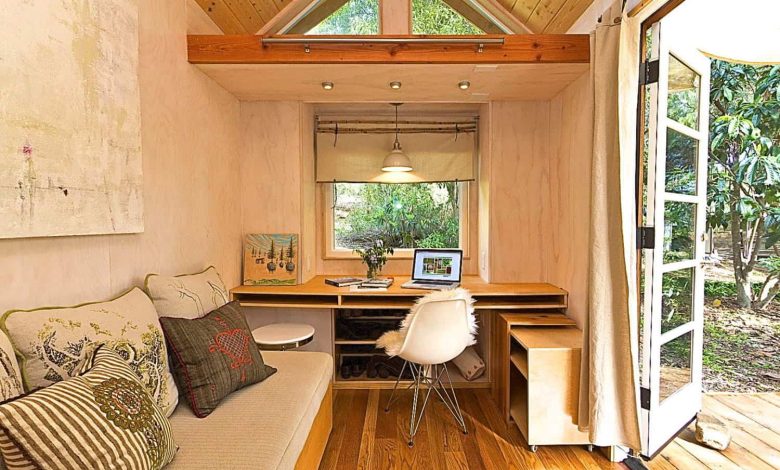
If you have been working from the kitchen table for the last few years, you already know the problem. There is no door to close, the dishwasher runs during calls, and the line between work and home blurs until it disappears. A cabin converted into a home office solves all of that in one move.
You want plenty of natural light, so plan for at least two windows on different walls to cut down on screen glare. Run power for a desk, a monitor, and a small heater or air conditioner. Insulation matters here more than you might think, not just for comfort but for sound. A well-insulated cabin is quiet, and quiet is what makes a video call feel professional. Add a small bookshelf and a comfortable chair that is not your desk chair, and you have a workspace you actually want to walk out to in the morning.
3. An Art or Craft Studio With Room to Make a Mess
Anyone who paints, sews, throws pottery, or does any kind of craft knows the worst part is not the craft itself but the cleanup and the constant putting away of supplies. A dedicated studio means you can leave a project half finished on the table and come back to it the next day without clearing everything off for dinner.
For a studio, prioritize lighting. North-facing light is the gold standard for art because it is even and does not shift color as the day goes on. If that is not possible, add full-spectrum overhead fixtures. A deep utility sink makes cleanup far easier, and open shelving along one wall keeps supplies visible and reachable. Skip carpet and go with a sealed wood or concrete floor that can take a spill.
4. A Hunting or Fishing Base Camp
If you hunt or fish, you know the value of being close to your spot at dawn without a two-hour drive. A small cabin on your own land or on leased property becomes a base camp that turns a day trip into a full weekend.
The layout for a hunting or fishing cabin is different from a guest house. You want durable flooring that can take muddy boots, hooks on the wall for gear, a small wood stove or propane heater for cold mornings, and bunks instead of a single bed so you can bring a friend or two. A covered porch gives you a place to clean gear and sit with a coffee while you watch the light come up. Keep the finishes simple and tough, because this cabin is meant to be used hard.
5. A Yoga or Meditation Room
Not every cabin needs to be a workspace or a bunkhouse. Some people use theirs as a quiet room, a place to stretch, meditate, or just sit without a phone in hand. A small cabin is the right size for this because it is separate from the house but close enough to walk to in a few seconds.
For a yoga or meditation room, keep the floor clean and flat, and consider a cork or solid wood surface that has a little give. Bring in natural light but add shades you can lower for midday sessions. Skip heavy furniture entirely. A small shelf for a speaker, a mat, and a cushion is all you need. If you insulate well, the space stays warm in winter and cool in summer, which makes it usable at any hour.
6. A Workshop for Woodworking or Repairs
A cabin makes a surprisingly good workshop for someone who does not need a full garage bay. The walls are solid enough to hang tool storage on, the floor takes a workbench without complaint, and the size forces you to be organized, which is a virtue in a shop.
Ventilation is the big one here. If you are cutting wood, soldering, or using any kind of finish, you need a way to move air through the space. A window fan pulling out and a cracked door letting fresh air in is the minimum. A small dust collection setup is worth the money if you are doing any real woodworking. Run plenty of outlets along one wall so you are not tripping over extension cords, and put the workbench under a window so you have light on whatever you are building.
7. A Rental or Glamping Unit
This is the use that can actually pay for the cabin over time. A small, well-finished cabin in a scenic spot can be listed as a short-term rental or a glamping unit, and the demand for that kind of stay has only grown as more travelers look for something other than a hotel room.
To make it rentable, you need a real bathroom, a small kitchen, a comfortable bed, and climate control. You also need to think about durability, because guests are harder on a space than you are. Choose finishes that clean easily, skip anything fragile, and put a small deck or porch outside so guests have a place to sit that is not the bed. A fire pit nearby turns a basic rental into an experience people will review well and come back to.
8. A Hobby Room for a Collection or a Passion
Some hobbies need a room of their own. A model train layout, a record collection, a sewing setup, a guitar and amp rig, a small library. These are the things that take over a house if you let them, and a cabin gives them a home without taking over.
The setup depends on the hobby, but a few rules apply across the board. Climate control matters because heat and humidity damage records, books, instruments, and wood models. Security matters if the collection has real value, so put a solid door and a good lock on it. And lighting matters because you will be in there for hours at a time and a single overhead bulb is not enough for detail work.
9. A Bunkhouse for Kids or Grandkids
If you have a big family or you host a lot, a cabin set up as a bunkhouse is a great way to give kids their own space when they visit. It is also a useful overflow room when the house is full for a holiday or a reunion.
A bunkhouse is simple by design. Bunk beds along one wall, a small dresser, a rug, and a light. You do not need a bathroom if the cabin is close to the house, but you do want insulation and heat so it is usable past the summer. Add a small table and a couple of chairs and it becomes a place where kids can play a game or read without being underfoot, which is good for them and good for you.
10. A Quiet Reading Room or Library
This is the most underrated use on the list. A small cabin set up as a reading room is a luxury that costs very little once the structure is in place. It gives you a place to go that has no television, no laundry waiting, no dishes in the sink, just a chair, a lamp, and a stack of books.
For a reading room, the priorities are a comfortable chair, good task lighting, and climate control so you can stay in it for a few hours in any season. Built-in bookshelves along one or two walls hold a surprising number of books in a small footprint, and a small side table gives you a place for a cup of tea. Keep the door solid and the windows shaded enough to cut glare, and you have a room that genuinely changes how much you read.
A Few Things That Apply to All of These
No matter which use you pick, a few upgrades pay off across the board. Insulation and a real heat source turn a three-season cabin into a four-season room. A dedicated electrical circuit means you can run a heater, a tool, or a small appliance without tripping a breaker. A solid door and good locks protect whatever you put inside. And a small porch, even a basic one, gives every one of these uses a transition space that makes the cabin feel like a destination rather than a shed.
The best use is the one that solves a real problem for you. If you have overnight guests often, build a guest house. If you work from home, build an office. If you have a hobby that has outgrown the spare bedroom, build a studio. The structure is the same. What you put inside it is what makes it work.